Every order flow tool for ES and NQ starts from the same raw material: the market data CME publishes. Comparing tools is easier once you know what that data contains and what each tool adds on top of it.
What the data gives you
CME's market data for futures carries two streams that matter for order flow:
- Trades. Price, size and the aggressor side: whether the buyer or the seller crossed the spread.
- Market depth. Resting size at each price, aggregated by price level, for a set number of levels on each side of the market.
The data is anonymous. You see how much rests at a price, not who placed it, and you do not see individual orders in the aggregated book. Real-time depth usually carries exchange fees, billed through your data provider, so check your subscription before choosing a tool that needs it.
Three kinds of tool
Order flow tools built on this data fall into three broad groups:
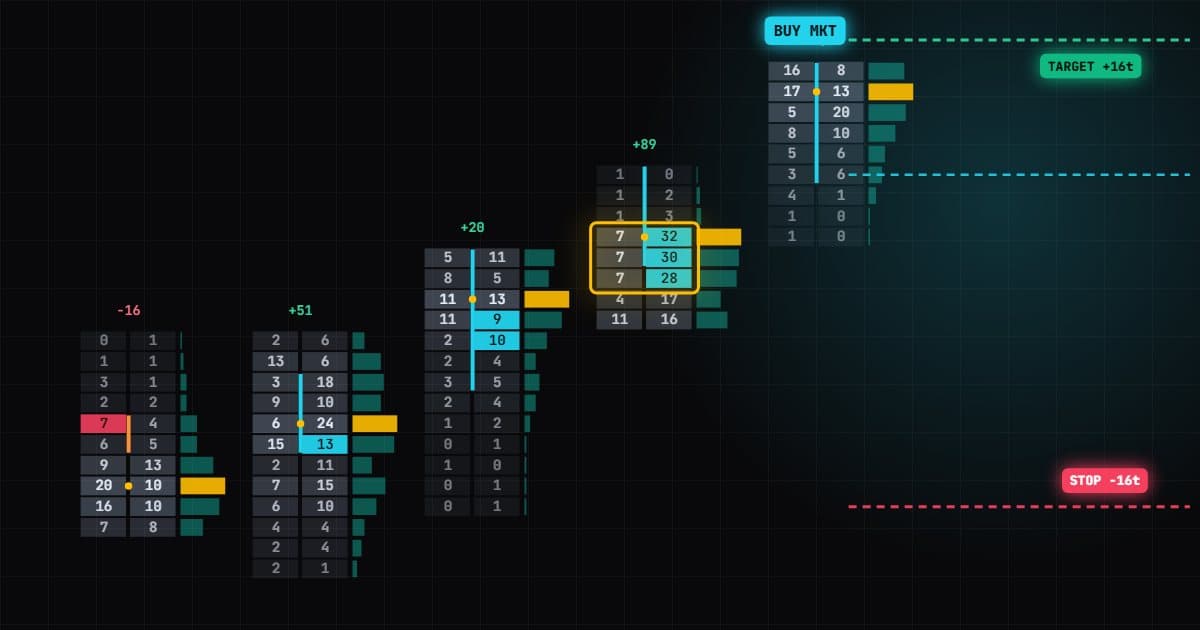
- Visual tools turn the data into pictures: footprint charts, depth ladders, heatmaps. You read them and decide.
- Alerting tools watch for a pattern and tell you when it appears. You still decide and click.
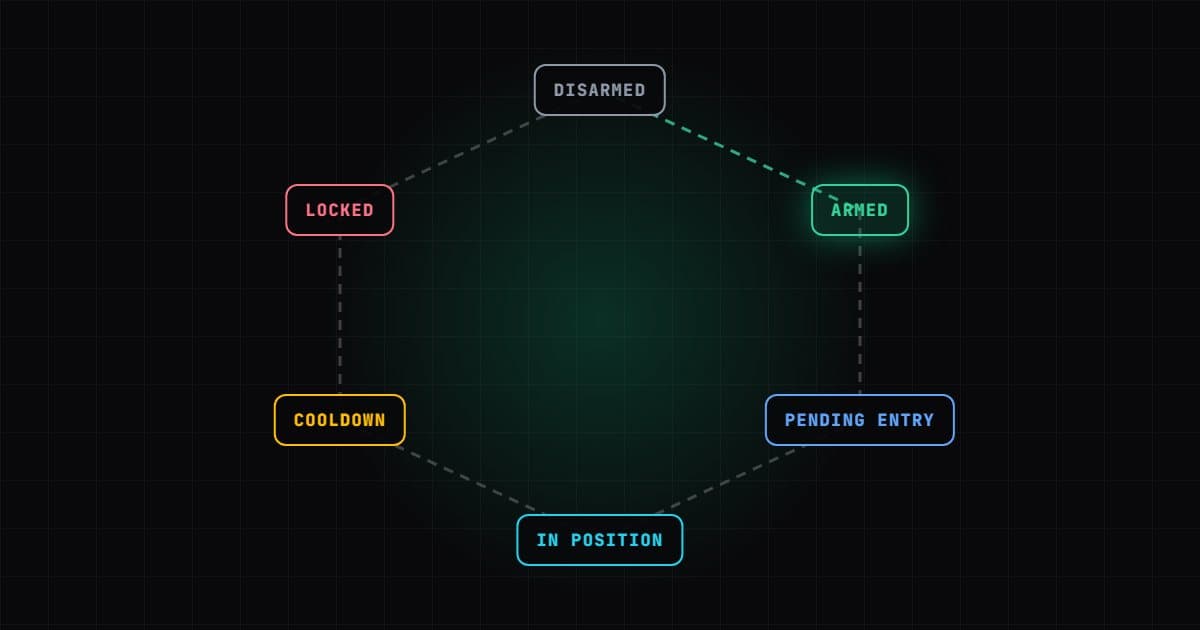
- Automated strategies define the pattern, the entry, the exit and the limits, and execute them in your platform. You supervise.
Each group suits a different kind of trader. Visual tools reward experience and screen time. Automated strategies reward patience with testing.
A selection checklist
- Data requirement. Does it need depth, or only trades with bid/ask? This decides your data bill.
- Signal definitions. Are the rules stated in numbers you can see and change, or hidden behind a coloured dot?
- Testability. Can you run it over history? Trade-based tools can be backtested with NinjaTrader's Tick Replay. Depth-based ones need Market Replay, because historical bars carry no book.
- Execution. If it trades, does it use market or limit entries, and how does it handle unfilled orders?
- Risk controls. Fixed brackets, a daily max loss that actually stops trading, a cooldown after losses.
- Platform. Does it run where you already trade, and with your prop firm's setup?
- Honest claims. Walk away from any tool that promises a win rate or says it sees "institutional" orders.
Where the Vantedge plans fit
Vantedge sells two automated strategies for NinjaTrader 8, built and tuned for ES and NQ. They sit in the third group but include indicators from the first two.
Vantedge FlowPilot ($299 per month) uses trade data only. It trades stacked bid/ask imbalances in the forming bar's footprint, with Follow, Fade and Auto modes, market entries and a 16-tick bracket by default. It can be backtested in the Strategy Analyzer with Tick Replay. It includes the Vantedge Footprint indicator.
Vantedge BookPilot ($399 per month) needs depth. It trades Pressure Break and Pulled Wall signals with limit entries behind the touch, Rules of Engagement and LOW / MEDIUM / HIGH risk presets. It is tested in Market Replay and SIM. It includes Vantedge BookScope, Vantedge Footprint and the Vantedge DOM Pressure Matrix, a SuperDOM column.
The comparison page puts both side by side and includes a section on how they differ from visual order flow tools.
Questions to put to any vendor
- What exactly triggers a signal, with default values?
- What data feed do I need, and what does it cost me?
- How do I test it before trading real money?
- What happens on a bad day: what stops it?
- Which instruments was it designed and tuned on?
A vendor who answers these plainly is giving you what you need to make your own judgement. Vague answers, or answers that lean on screenshots of winning days, tell you something too.
Finally, consider how a tool fits your routine. A visual tool needs you at the screen for every trade. An automated strategy needs you at the screen less often, but needs more preparation: settings checked before the open, daily limits matched to your account and a plan for what you will do if the platform or connection drops.
The best order flow tool still operates in a market where losses can exceed what you planned for. Whatever you choose, prove it in SIM, and in Market Replay for depth-based tools, before an evaluation, funded or live account.