"Institutional-grade" is one of the most common phrases on retail trading software pages, and one of the least defined. It sounds like a promise that you are getting what the big firms use. Usually you are not, and that is fine. What matters is whether a tool is honest about what it does and whether it fits how you trade.
What institutions actually have
When a trading firm builds its own order flow systems, the software is only part of the advantage. The rest is infrastructure a retail trader cannot buy as a download:
- Proximity. Servers placed physically next to the exchange's matching engine, cutting delays to tiny fractions of a millisecond.
- Raw data. Full exchange feeds, rather than data passed through a retail broker and platform.
- Research teams. People whose job is to test, monitor and retire models.
- Risk desks. Independent controls that can shut a strategy down.
- Scale and cost structure. Exchange fee tiers and capital that change what a strategy has to earn per trade.
No retail subscription closes those gaps. A product that implies otherwise is overselling.
What the label usually means on a retail page
In practice, "institutional-grade" tends to mean one of three things: the tool uses Level 2 data, it does some maths on order flow, or it looks dark and dense. None of these tell you whether it works for you.
Better questions than "is it institutional?"
Can you see exactly what it does?
Look for published rules and settings. A strategy whose entry logic, defaults and ranges are documented can be checked. A black box cannot. The FlowPilot user guide, for example, lists every setting with its default, allowed range and what happens when you raise or lower it.
Can you test it before risking money?
For a footprint strategy, that means Strategy Analyzer backtests with Tick Replay. For a Level 2 strategy, which cannot be backtested on historical bars because they carry no order book, it means Market Replay with depth data and SIM.
Does it have hard risk limits?
Firms put limits outside the trading logic. The retail equivalent is a daily profit goal, a daily max loss and a cooldown after a loss that the strategy enforces itself, plus a one-click flatten.
Is it honest about limits?
Good documentation says what the tool does not do: which data it needs, which market conditions it was built for, which features need extra data.
Does the vendor make performance claims?
Profit screenshots and headline results on a sales page are a warning sign, not a feature.
How Vantedge describes its own products
Vantedge Alpha sells two NinjaTrader 8 strategies for ES and NQ, and the descriptions are deliberately plain.
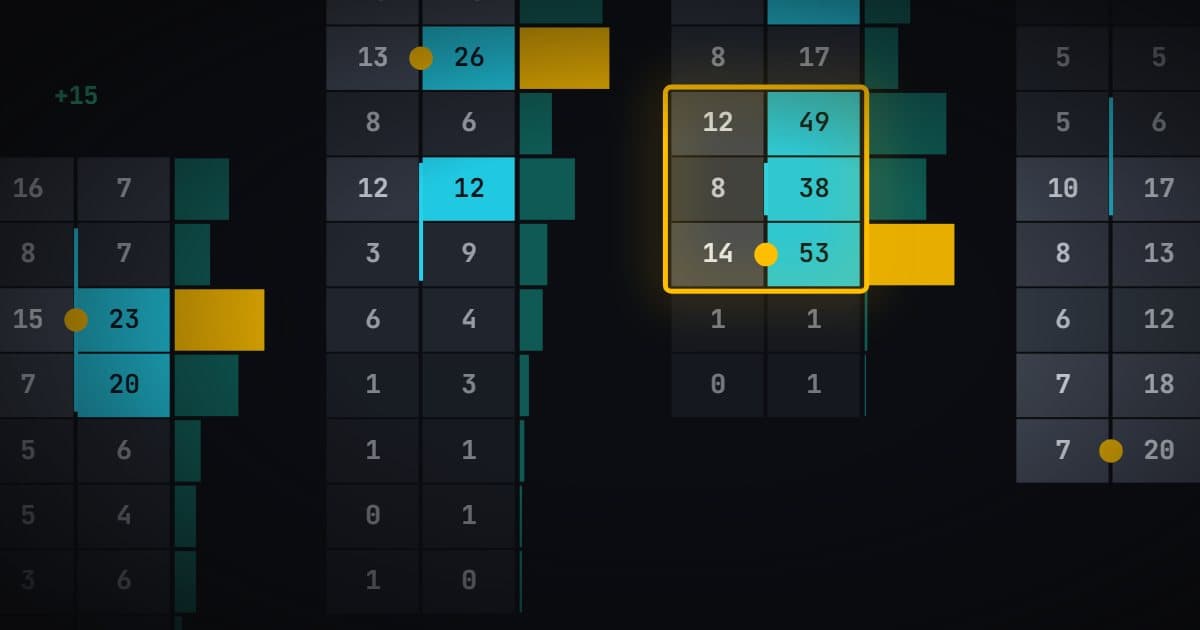
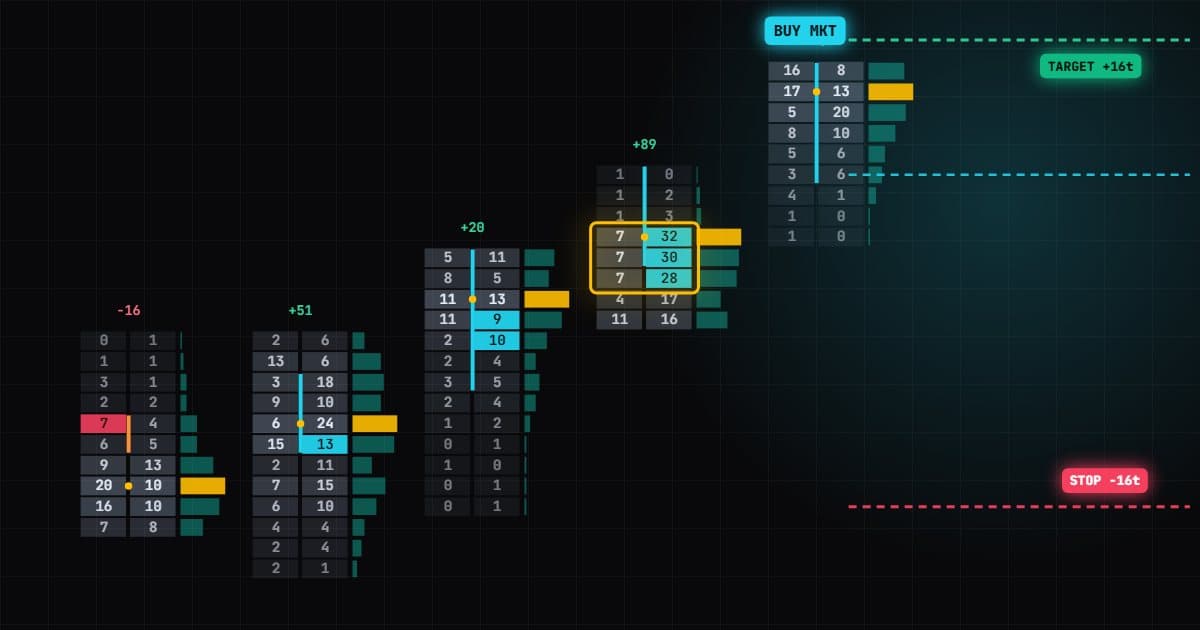
- Vantedge FlowPilot ($299 a month) trades stacked bid/ask imbalances in the forming bar's footprint, with Follow, Fade or Auto direction, market entries and a 16/16 tick bracket. It needs tick data with bid/ask, not Level 2, and can be backtested with Tick Replay.
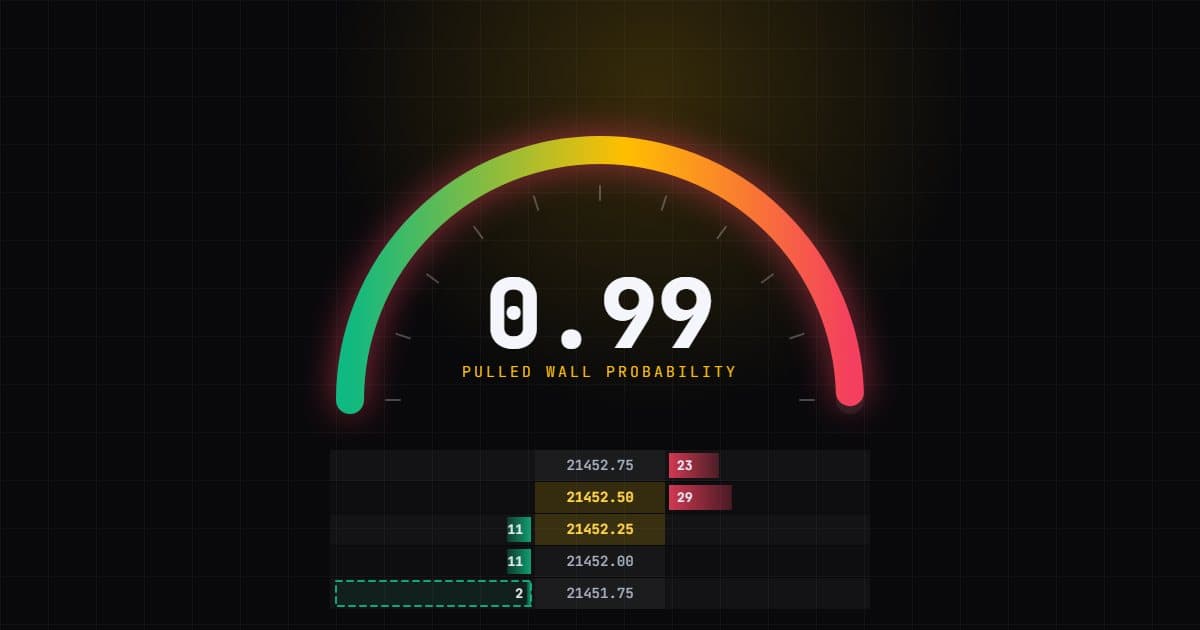
- Vantedge BookPilot ($399 a month) trades Pressure Break and Pulled Wall signals from the Level 2 book with limit entries behind the touch, a $150 / $100 bracket per contract by default and Rules of Engagement. It runs in real time and Market Replay only.
Both enforce a daily goal and max loss. Neither comes with a performance promise, and each guide states what data the strategy needs and how it can and cannot be tested. The comparison page sets the two side by side.
A realistic expectation
Retail order flow software can give you structure: consistent rules, executed the same way every time, with limits you cannot talk yourself out of in the moment. That is valuable. It is not the same as an institution's edge, and a tool that admits this is usually easier to trust than one that claims the opposite.
If you want to see what the products include without the adjectives, start at the products page.
No label makes futures trading less risky. Whatever you buy, test it on SIM (and in Market Replay for Level 2 tools) before an evaluation, funded or live account depends on it.